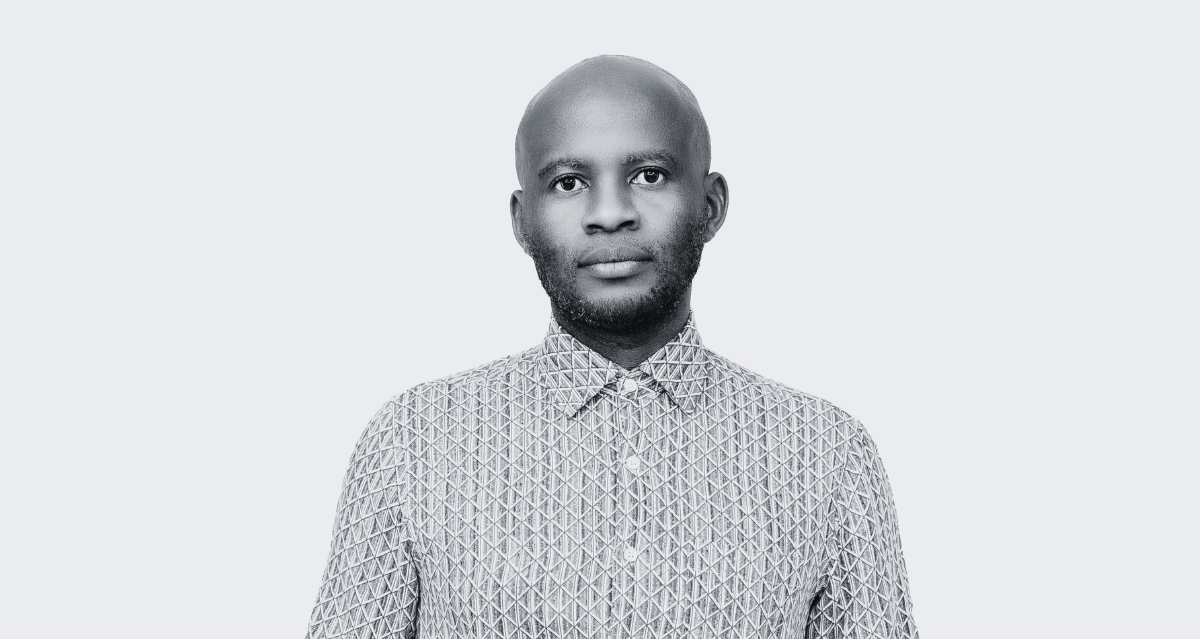
TIISETSO MALOMA

Book: Daily Grace & Ubuntu Stoicism

Available at, my webstore (South Africa), Takelot.com, Bargain Books and Exclusive.

Daily Grace & Ubuntu Stoicism is a year-long meditation journey designed to help us see ourselves and the world through the lenses of clarity, compassion, and inner stillness. It weaves together four spiritual and philosophical streams—Stoicism, Ubuntu, Biblical grace, and meditative stillness (Silent Prayer)—to reveal a simple yet transformative truth: you are not your thoughts, and you do not have to suffer under them.

Read more

James Altucher Helped Me Write My First Book — and I Ended Up Lying to Him. I Also Never Intended to Build a BookTech Business | VentureBooks OS

I never planned on being a book publisher. I never planned on writing 10 books. And I definitely didn’t plan on building a BookTech company. Yet here we are

When I first thought about writing a book, I stumbled on a post by James Altucher — my favourite blogger and author at the time (still is). He said it was perfectly fine to write a book that’s only 20-something pages long. This must have been around 2012 in one of his viral posts.

Or maybe the idea for a book came from the article of his. I don’t quite remember. But I do remember this: his book 40 Alternatives to College is only 52 pages long.

Here’s where everything really starts.

In 2012, after a string of failed entrepreneurial attempts, I had moved back home. I must have been stressed and depressed, although I don’t think I had those words for what I was feeling then.

Earlier that year, I had written an article called Great Brand Components. While working on it, I realised I never really used business plans — they were too long, too static, too impractical for daily work.

I suddenly saw the article for what it really was: a framework for how to think about and run a business. I reworked it, and it became the EBC Business Model, which eventually became my book Forget the Business Plan — Use This Short Model. The core idea was simple: Product × Marketing × Distribution = Cash Flow.

If you’re not generating cash flow, one of those three is broken.

Thank you, James, for planting the idea. My book ended up being 54 pages — short enough that I thought, James does short books, so maybe I can do one too.

Before that book, I had actually reached out to James in hopes of bringing him to South Africa for a speaking event. His team sent me a quote — thousands of dollars. I promised I would have the money by a certain date.

I had never seen that kind of money. I went around trying to find sponsors.

I failed. Sorry, James.

This was 2012.

Since then, I’ve written hundreds of proposals, several books, and become a publisher who pioneered and angel-invested in two genres — diary chronicles and ubuntu stoicism. And now, we’re raising a seed round for VentureBooks OS.

VentureBooks OS combines hyper-fast manuscript acquisition, AI-powered publishing, and scalable BookTech infrastructure into one platform that can monetize creativity globally. It will power our own IP imprint, and any publisher — from startup presses to established houses — beginning in Africa.

The idea began when we discovered 1,000+ high-traction manuscripts and asked ourselves:
How do we publish these faster, cheaper, and smarter — and transform them into global IP assets?

Because of that first book James inspired, we’ve uncovered countless publishing opportunities and possible solutions. But funding them from my own pocket has always been the bottleneck.

VentureBooks OS is the solution.

The plan is to scale to 10,000 of our own titles, plus thousands more from other publishers. The platform will integrate AI into everything from contract management to licensing books for film and other adaptations.

In short: We’re building the operating system for book publishing — starting in Africa, designed to scale worldwide.

Is ESD a Scam? Over-Mentored, Under-Funded: Entrepreneurs Say It’s an Industrial Complex That Uses Them as Bait – Feeding Corporate Staff and Consultants, Leaving Only Crumbs | First Principle Solutions

Some of the ideas will feature in my upcoming economics book, Robust Manifesto Nation.

“Entrepreneurs are heroes in our society. They fail for the rest of us.”  –  Nassim Nicholas Taleb (Skin in the Game)

– – –

I recently shared a LinkedIn post by someone criticizing the Enterprise and Supplier Development (ESD) system – saying South African entrepreneurs are over-mentored and underfunded.

It showed the iconic video of Sibusiso Ngwenya of Skinny Sbu Socks on SABC News, where he outright defied the advice of an invited mentor on the show. Sbu said he “needs money” and not “solutions,” i.e., he does not want advice, but money. His business needed money as his market had developed and demand was growing.

Read more

Book | Robust Manifesto Nation

How do we make a nation truly robust—yours or mine—for the betterment of all, in the realest, most dynamic way possible?

Robust Manifesto Nation is a collection of what I call robust-dynamic-ideas—not theories, not ideologies, but practical principles that can help nations live in this complex, unpredictable world.

This is a book that kills fragile theories. Why? Because as the world becomes more complex, fixed models become more dangerous. You’ll come across terms like decentralisation, proprietary, antifragility, ergodicity, optionality, via negativa, and upside—concepts that challenge conventional economics and push us toward systems that are adaptable, resilient, and built through careful trial and error.

If you’ve read Nassim Taleb, you’ll recognize many of these frameworks. I credit his work for helping me name and structure the insights I had long sensed but couldn’t yet express.

In one sense, this is a book about economics. But not the textbook kind. It’s about how to think in systems, how to navigate risk, and how to design societies that grow stronger through stress, not despite it.

Elon Musk’s Starlink Ready to Connect 5000 Rural Schools in South Africa — But ICASA, Not BEE, Is Blocking It

My book Innovate Like Elon Musk is available on this blog, Amazon and SA bookstores.

If you follow tech news — or Elon Musk’s social media rants — you might have come across the claim that Starlink can’t operate in South Africa because of “racist laws.” He once said, “Starlink can’t get a license to operate in South Africa simply because I’m not Black. How is that right?” That statement is not only misleading, it’s outright false.

Interestingly, it now seems the company has changed its tune after previously abandoning the pursuit. On 14 June 2025, Starlink sent a letter to Minister Mpho Parks Tau (DTIC) reaffirming its interest in operating in South Africa.

Read more